Thursday, September 10, 2026

SEIRRA LEONE BUNDO SOCIETY: MUTILATION OR JUST CIRCUMCISION??

By Israel Ojekeh Parper Snr

WESTERN EMOTIVE APPROACH TO BUNDO CULTURE USING THE AGGRESSIVELY EMOTIONAL DISCHARGED WORD "MUTILATION" ENGADED TO DEVALUE THE MORE MILDER VISION OF THE PROCEDURE OF "CIRCUMCISION"!


Why is it "MUTILATION"? Why not F G C (Female circumcision?) Men are circumcised but why are women mutilated...or, is that it.?

The question of whether the practice must/should stop is another debate in itself. The deliberate choice of the term "MUTILATION"(sic) is a skilful manipulation and evocation of emotions against the society's practice by Anti-Female attitude breakers.


Of course in Sierra Leone, this is a woman's secret society and not for men to dabble into nor especially for the Krios/Creoles. But there are many, many well to do highly placed, educated well brought up women who do not see themselves as being "MUTILATED"; for the use of this term and what it connotes, devalue the 'dignity' (as the society sees it) which is being projected or purported to be good for girls and young women undergoing the process for their future marital/ home development. 

Of course Anti-practitioners see the entire process as against women's rights forgetting that the very Human Rights Law provides rights/freedom for everyone to do what she thinks is right with her body post maturity, (18 years); which I understand the Minister is advocating. This proposition portends to protect the Bundo Society and its ancient culture minus the "cutting" practice of female circumcision. Perhaps there is a case for that approach if we are to maintain and safeguard long standing cultural values and practice. So, those having the opportunity may study/learn Home Economics in a school environment (developed from long ago 'Cookery', Needle Work, certain domestic chores which even education pioneers like Castly Hayford  could not successful implement). 

These Bundo girls and young are said to be taught practical disciplines that prepare them for future house wives. In all medical procedures improvements are made these days- perhaps the Society and the world will gain more if the surgical technics are improved and the identified risks are eliminated. I have NO PERSONAL INTEREST in the merits or demerits of Bundo practices: I just grew up in a country where it is part of our culture, like the Men PORO, or the SANDE, or WANDE, OJEH, OGUNUGU, ORO, HUNTING (and I don't mean Paddle, Bloody Mary 'Kaka debul' type Ordele).

Why should we allow WESTERN definitions and labels to devalue and eradicate our cultural heritages - what's the next stop if not BUNDO MUTILATION??


:::::::::::::::::::::::::::::::::::::::::::::::::::::::::::::


A TEENAGER'S POINTS OF VIEW!!

THE THOUGHTS OF A SIERRA LEONEAN TEENAGER

BY EUNICE NAFFIE MUSTAPHA

From time immemorial THE THOUGHTS OF A SIERRA LEONEAN TEENAGER

BY EUNICE NAFFIE MUSTAPHA

From time immemorial secret societies have been an integral part of Sierra Leone’s cultural heritage. The Bondo Society for women, Poro Society for men and other secret societies. These societies serve as informal educational institutions. Girls learn domestic and other skills that help them throughout their lives, while boys learn skills that help them to adapt in the society at large.  

These societies create a strong bond among initiates and it involves a lot of respect bestowed on society members. These societies played important political roles in pre-colonial days and they still have an influence over traditional authorities.

The Bondo Society is very useful in Sierra Leone, our mothers and grandmothers benefitted a lot from it. They became good housewives, learning the skills of cooking, child care etc. They were taught the act of matrimonial ways in the Bondo bush. 

Girls are usually taught the act of singing, dancing etc. The rich culture of Sierra Leone is passed on.

This tradition is slowly declining, a lot of girls including myself cannot boast of knowing traditional dancing steps or songs. Modernization has affected Sierra Leoneans both positively and negatively. Girls who live in the city usually think less of the traditions prevalent in our motherland. Girls care less these days about becoming initiates of the Bondo society. The western culture has changed the mindset of most girls. One may wonder why these girls are no longer anxious about becoming initiates of this society.

The adoption of Western culture has broadened the horizon of most girls, they are fully aware of the Female Genital Mutilation (FGM). They are aware of the dangers that they are exposed to such as HIV/AIDS, Tetanus, Sterility and other infections. Western education has played a great role in the provision of knowledge. The thoughts of being subjected to such treatments scare girls away and they lose the chance of learning useful skills in the Bondo bush.

If the FGM aspect is terminated, a lot of girls would be excited about becoming initiates of the Bondo Society. The percentage of educated girls who are initiates would increase greatly. I know that the FGM aspect has been an integral part of the society but with all the risks that it entails, there would not be any harm in ending it. 

The tradition is slowly dying especially among literate women and we should not let FGM be the reason for the slow decline of such a wonderful society. African girls have to be groomed for womanhood. Our tradition should be attractive to us instead of scaring us.

I FULLY SUPPORT THE BONDO SOCIETY BUT I SAY NO TO FEMALE GENITAL MUTILATION (FGM)!!! societies have been an integral part of Sierra Leone’s cultural heritage. The Bondo Society for women, Poro Society for men and other secret societies. These societies serve as informal educational institutions. Girls learn domestic and other skills that help them throughout their lives, while boys learn skills that help them to adapt in the society at large.  

These societies create a strong bond among initiates and it involves a lot of respect bestowed on society members. These societies played important political roles in pre-colonial days and they still have an influence over traditional authorities.

The Bondo Society is very useful in Sierra Leone, our mothers and grandmothers benefitted a lot from it. They became good housewives, learning the skills of cooking, child care etc. They were taught the act of matrimonial ways in the Bondo bush. 

Girls are usually taught the act of singing, dancing etc. The rich culture of Sierra Leone is passed on.

This tradition is slowly declining, a lot of girls including myself cannot boast of knowing traditional dancing steps or songs. Modernization has affected Sierra Leoneans both positively and negatively. Girls who live in the city usually think less of the traditions prevalent in our motherland. Girls care less these days about becoming initiates of the Bondo society. The western culture has changed the mindset of most girls. One may wonder why these girls are no longer anxious about becoming initiates of this society.

The adoption of Western culture has broadened the horizon of most girls, they are fully aware of the Female Genital Mutilation (FGM). They are aware of the dangers that they are exposed to such as HIV/AIDS, Tetanus, Sterility and other infections. Western education has played a great role in the provision of knowledge. The thoughts of being subjected to such treatments scare girls away and they lose the chance of learning useful skills in the Bondo bush.

If the FGM aspect is terminated, a lot of girls would be excited about becoming initiates of the Bondo Society. The percentage of educated girls who are initiates would increase greatly. I know that the FGM aspect has been an integral part of the society but with all the risks that it entails, there would not be any harm in ending it. 

The tradition is slowly dying especially among literate women and we should not let FGM be the reason for the slow decline of such a wonderful society. African girls have to be groomed for womanhood. Our tradition should be attractive to us instead of scaring us.

[While] I FULLY SUPPORT THE BONDO SOCIETY BUT I SAY NO TO FEMALE GENITAL MUTILATION (FGM)!!! (Eunice Naffie Mustapha).

LEAVE ANNIE WALSH SCHOOL ALONE.COM - 1


WE CANNOT TURN ANNIE WALSH SCHOOL PROPERTY INTO A MARKET!! No SIR!
Folks , this is the report of the news published in AWOKO Newspaper- Some kind friend e-mailed it to me yesterday. (SEE AT THE END OF MY COMMENTS)
 Sometimes Governments tend to attempt some woeful policies which eventually hurt them in the end. We've just seen the embarassing backing down by the British Government on Education Policy - viz- to scarp the GCSE. The Secretary of State , Michael Gove curt a 'humiliating U-turn' admitting the policy reforms were "a bridge too far". Whosoever advised our beloved President to embark on this road to MOVE The Annie Walsh School from their location of nearly 200 years does not apppear to love the President because that person or persons must realise the trouble this announcement will cause. There are better options in the lacation of a Market in the Center of Freetown. Do we want to turn that area of Freetown into one gaigantic Market crowded village - once that Market is built, within a short time we surely will be bosting of one great Shanty sub-town and the whole of Kissy Road, Mountain Cut, Magazine Cut. Fireburn will merge with Upper and Lower Bombay Streets to make one sub-district of a Shanty town. If Annie Walsh School is moved , will the Gibralter Church be moved too? If the Annnie Walsh School is moved, will The Holy Trinity Church with its Primary School be moved too? Will the policy spread to the Cathedral School and the St Marys School? Where will this policy end? Yes there is great need for de-congestion but wiser policy action is needed not this frivolous and disturbing approach. Government and the City Council must now come up with policy action plan to move the illegal traders from the vicinity of The Annie Walsh- that is the focus that must be embraced now. It is clear that some action be taken , but not the one revealed by this news. I dare say I am not impressed by Mr Osho-Coker's letter. It evokes PROVOCATION- and I do not like it. I am seeing this separately from my personal point of view - yes as an APC dedicated member and I serve the Party for very long but I separate this issue totally from the Party and the Government. THIS to me is not an APC policy but a government policy which I dislike totally. The Annie Walsh is my mother's school. It is the school my mother's Grand Aunty, Miss CLARA BELFORD, (that is the sister of my maternal Grandmother from Benguima) taught for decades: many of my relatives and friends including Mrs Elizabeth Lavally-the former Deputy Speaker of Parliament, went to that school even the President's wife - The First Lady, and the wife of the Former High Commissioner of Sierra Leone to the UK Mrs Challobar and many other prominent women. THE HERITAGE MUST BE PRESERVED. Kissy Street Market and the area surrounding it can be buldozed and clear to build a SUPPER MARKET: or a Shopping Centre- this can go all the way down to 'BIG WARF'; Or Cow Yard and its visinty can be used to build this market for the Market woman dem. or Maket man dem.   BUT LEAVE ANNIE WALSH  SCHOOL ALONE .COM -

PLEASE READ THE AWOKO REPORT BELOW. 

 *****************************************************

For the construction of a Modern Market Annie Walsh School to relocate

Bishop Julius O.P Lynch, proprietor of the Annie Walsh Memorial School has received a letter from the Secretary to the President, proposing the relocation of the school from its present location at Kissy Road for the construction of a modern market.
The letter written by E.B. Osho-Coker, to the Lord Bishop of Freetown and the North states, “as you are no doubt aware, when the Annie Walsh Memorial School (AWMS) moved to its present location on Kissy Road, Freetown in 1865, the environment was ideally suitable for a school that pursued excellence in all areas including high academic performance, sound discipline and a solid Christian foundation.
However, the passage of time, has witnessed a massive growth in the city’s population and
concomitant expansion of trading activities eastwards, the area occupied by the school has become an unsuitable environment for the pursuit of academic excellence.
As Government intensifies its efforts at waste management, improvement of road safety and decongestion through “Operation WID” the compelling need for relocation of the AWMS to a more ideal site has been identified.
The selection of the site will be at the behest of the proprietors of the AWMS and arrangements will be concluded with Government for acquisition of the land and construction of the new school. The land vacated at Kissy Road will then be utilized for the construction of a modern market to be occupied by traders that are being removed from the streets of Freetown.
His Excellency the President, has instructed me to bring this proposal to your attention, so that it can be initially considered by the Church and School authorities.
Please be informed that His Excellency looks forward to a favourable consideration of the proposal contained herein,” the letter concluded.
Bishop Lynch’s first reaction to the letter dated 29th January 2013, was to write the Secretary of the Improvement Relocation Committee of the Annie Walsh Memorial Old Girls Association (AWOGA).
In his letter, he stated, “I hasten to bring this letter received on 30th January 2013 from the Secretary to the President to your notice, for a speedy consideration of the proposal contained in the document. Kindly advise me, so that I can respond appropriately alongside our proposal for privatization.
He ended his letter on this note, “This matter cries haste and must be treated as such.”
However, most Old Girls are of the opinion that there is a need to maintain the present location.
Another school of thought lamented that “but it seems we don’t know what to do with our monuments, relics and historic sites.”
The lady further affirmed “Look at the old FBC building at Cline Town. So far, no effort has been made to preserve it, stressing on “it is our history..our story we need to preserve it. What do we show our kids tomorrow?
Tourists, visitors and Sierra Leoneans need to be able to go on tour to the old FBC building at Cline Town and even the AWMS on Kissy Road. That site needs to be preserved, not destroyed. Do we know what we want to do willingly? Look at what the Islamists are doing in Mali and the attention it got from the international community. Then to think, we want to willingly destroy our heritage”, she lamented.
By Samuel Dennis John
See more


Photo: Folks , this is the report of the news published in AWOKO Newspaper- Some kind friend e-mailed it to me yesterday. (SEE AT THE END OF MY  COMMENTS)  CO   )                                                                                                                                                                                                      Sometimes Governments tend  to attempt some woeful policies which eventually hurt them in the end. We've just seen the embarassing backing down by the British Government  on Education Policy - viz- to scarp the GCSE. The Secretary of State , Michael Gove curt a 'humiliating U-turn' admitting the policy reforms were "a bridge too far".                                                                                                Whosoever advised our beloved President to embark on this road to MOVE The Annie Walsh School from their location of nearly 200 years does not apppear to love the President because that person or persons must realise the trouble this announcement will cause.   There are better options in the lacation of a Market in the Center of Freetown. Do we want to turn that area of Freetown into one gaigantic Market crowded village - once that Market is built, within a short time we surely will be bosting of one great Shanty sub-town and the whole of Kissy Road, Mountain Cut, Magazine Cut. Fireburn  will merge with Upper and Lower Bombay Streets to make one sub-district of a Shanty town. If Annie Walsh School is moved , will the Gibralter Church be moved too? If the Annnie Walsh School is moved, will The Holy Trinity Church with its Primary School be moved too? Will the policy spread to the Cathedral School and the St Marys School? Where will this policy end? Yes there is great need for de-congestion but wiser policy action is needed not this frivolous and disturbing approach. Government  and the City Council must now come up with policy action plan to move the illegal traders from the vicinity of The Annie Walsh- that is the focus that must be embraced now. It is clear that some action be taken , but not the one revealed by this news. I dare say I am not impressed by Mr Osho-Coker's letter. It evokes PROVOCATION- and I do not like it. I am seeing this separately from my personal point of view - yes as an APC dedicated member and I serve the Party  for very long but I separate this issue totally from the Party and the Government. THIS to me is not an APC policy but a government policy which I dislike totally. The Annie Walsh is my mother's school. It is the school my mother's Grand Aunty, Miss CLARA BELFORD, (that is the sister of my maternal Grandmother from Benguima) taught  for decades: many of my relatives and friends including Mrs Elizabeth Lavally-the former Deputy Speaker of Parliament, went to that school even the President's wife - The First Lady, and the wife of the Former High Commissioner of Sierra Leone to the UK Mrs Challobar and many other prominent women.  THE HERITAGE MUST BE PRESERVED. Kissy Street Market and the area surrounding it can be buldozed and clear to build a SUPPER MARKET: or a Shopping Centre- this can go all the way down to 'BIG WARF'; Or Cow Yard and its visinty can be used to build this market for the Market woman dem. or Maket man dem. BUT LEAVE ANNINWALSH ALONE .COM -                                                                                                                                                                                                                     PLEASE READ THE AWOKO REPORT BELOW. BELOW                                                                                                        *****************************************************     For the construction of a Modern Market Annie Walsh School to relocate                                                                                                           &&&&&&&&&&&&&&&&&&&&&&&&&&&&&&&&&&&&
Bishop Julius O.P Lynch, proprietor of the Annie Walsh Memorial School has received a letter from the Secretary to the President, proposing the relocation of the school from its present location at Kissy Road for the construction of a modern market.
The letter written by E.B. Osho-Coker, to the Lord Bishop of Freetown and the North states, “as you are no doubt aware, when the Annie Walsh Memorial School (AWMS) moved to its present location on Kissy Road, Freetown in 1865, the environment was ideally suitable for a school that pursued excellence in all areas including high academic performance, sound discipline and a solid Christian foundation.
However, the passage of time, has witnessed a massive growth in the city’s population and
concomitant expansion of trading activities eastwards, the area occupied by the school has become an unsuitable environment for the pursuit of academic excellence.
As Government intensifies its efforts at waste management, improvement of road safety and decongestion through “Operation WID” the compelling need for relocation of the AWMS to a more ideal site has been identified.
The selection of the site will be at the behest of the proprietors of the AWMS and arrangements will be concluded with Government for acquisition of the land and construction of the new school. The land vacated at Kissy Road will then be utilized for the construction of a modern market to be occupied by traders that are being removed from the streets of Freetown.
His Excellency the President, has instructed me to bring this proposal to your attention, so that it can be initially considered by the Church and School authorities.
Please be informed that His Excellency looks forward to a favourable consideration of the proposal contained herein,” the letter concluded.
Bishop Lynch’s first reaction to the letter dated 29th January 2013, was to write the Secretary of the Improvement Relocation Committee of the Annie Walsh Memorial Old Girls Association (AWOGA).
In his letter, he stated, “I hasten to bring this letter received on 30th January 2013 from the Secretary to the President to your notice, for a speedy consideration of the proposal contained in the document. Kindly advise me, so that I can respond appropriately alongside our proposal for privatization.
He ended his letter on this note, “This matter cries haste and must be treated as such.”
However, most Old Girls are of the opinion that there is a need to maintain the present location.
Another school of thought lamented that “but it seems we don’t know what to do with our monuments, relics and historic sites.”
The lady further affirmed “Look at the old FBC building at Cline Town. So far, no effort has been made to preserve it, stressing on “it is our history..our story we need to preserve it. What do we show our kids tomorrow?
Tourists, visitors and Sierra Leoneans need to be able to go on tour to the old FBC building at Cline Town and even the AWMS on Kissy Road. That site needs to be preserved, not destroyed. Do we know what we want to do willingly? Look at what the Islamists are doing in Mali and the attention it got from the international community. Then to think, we want to willingly destroy our heritage”, she lamented.
By Samuel Dennis John

Friday, May 22, 2026

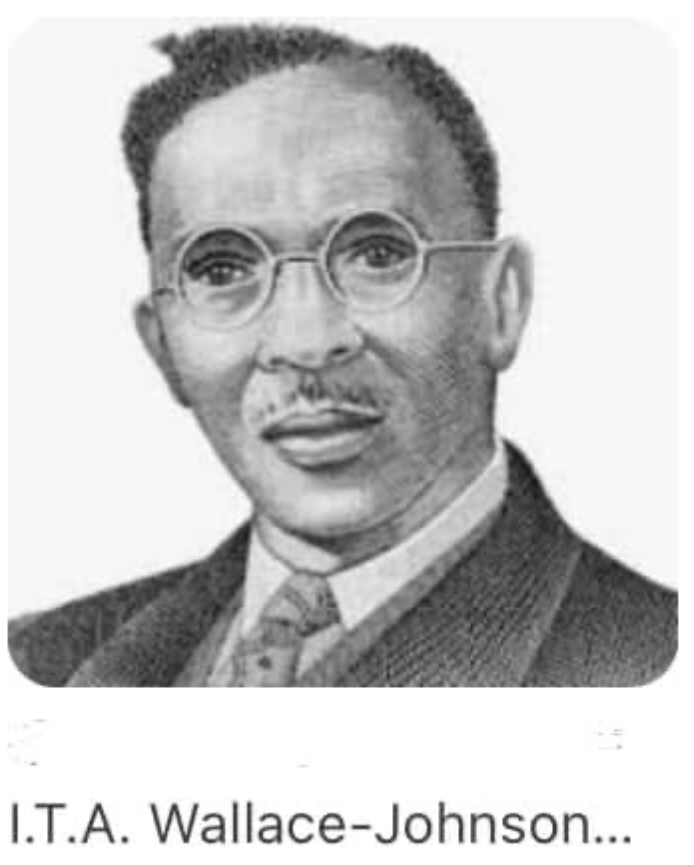
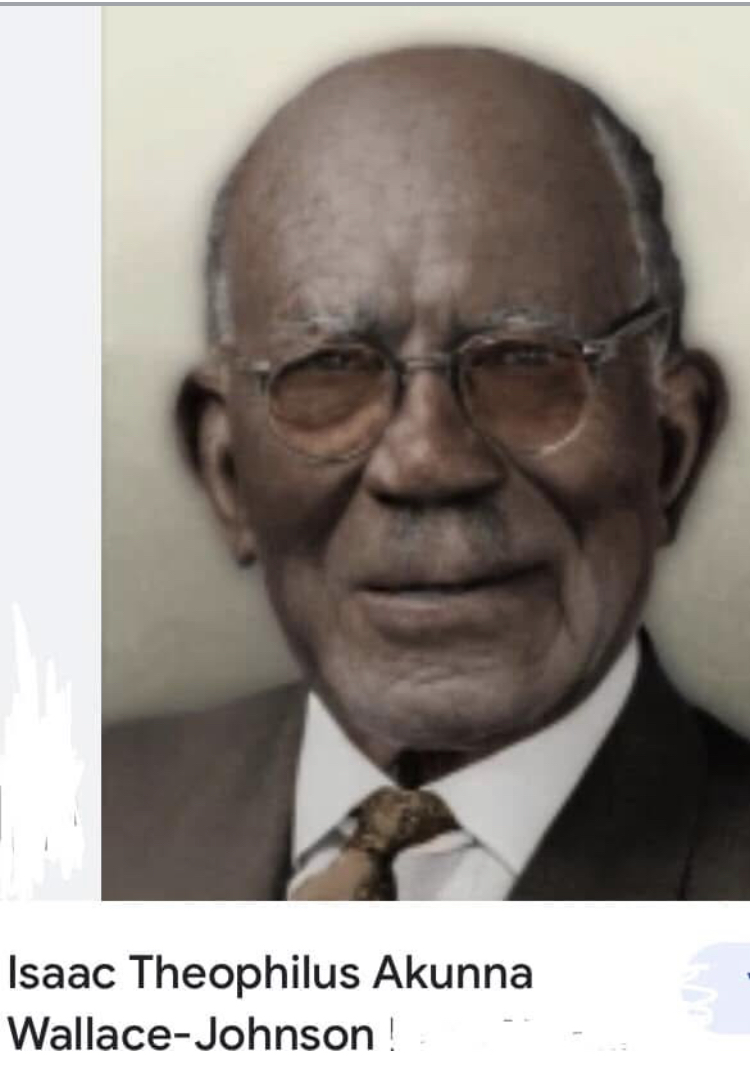
ISAAC THEOPHILUS AKUNA WALLACE JOHNSON - TRADES UNIONIST, POLITICIAN AND LEADER

On May 10, 1965, at the age of 70, ISAAC THEOPHILUS AKUNA WALLACE JOHNSON died in a car crash in Ghana while attending the Afro Asian Solidarity Conference.

Was that a freak accident, or, was that an orchestrated political assassination?

Isaac Theophilus Akunna Wallace-Johnson (1895-1965) was a West African trade union organizer, nationalist political leader, journalist, and pan-Africanist.


Isaac Wallace-Johnson was born of Creole parents in Wilberforce, Sierra Leone. Educated mainly in mission schools, he had to abandon secondary school in order to support his family. He worked in various commercial establishments until 1913, when he became a clerk for the colonial government.


Bureaucratic Career

Wallace-Johnson's talents as an organizer and public speaker quickly propelled him to a position of leadership. At the Customs Department, he organized the first trade union in Sierra Leone, among temporary customs officers. When he called for a strike in 1914, he was fired. He entered the British army in 1915 as a clerk in the Carrier Corps. Returning to Sierra Leone in 1920, he worked for the Freetown City Council but resigned in 1926 to serve on a United States merchant ship. He published The Seafarer, an occasional journal of maritime labor news, then joined the staff of the Lagos Daily Times.

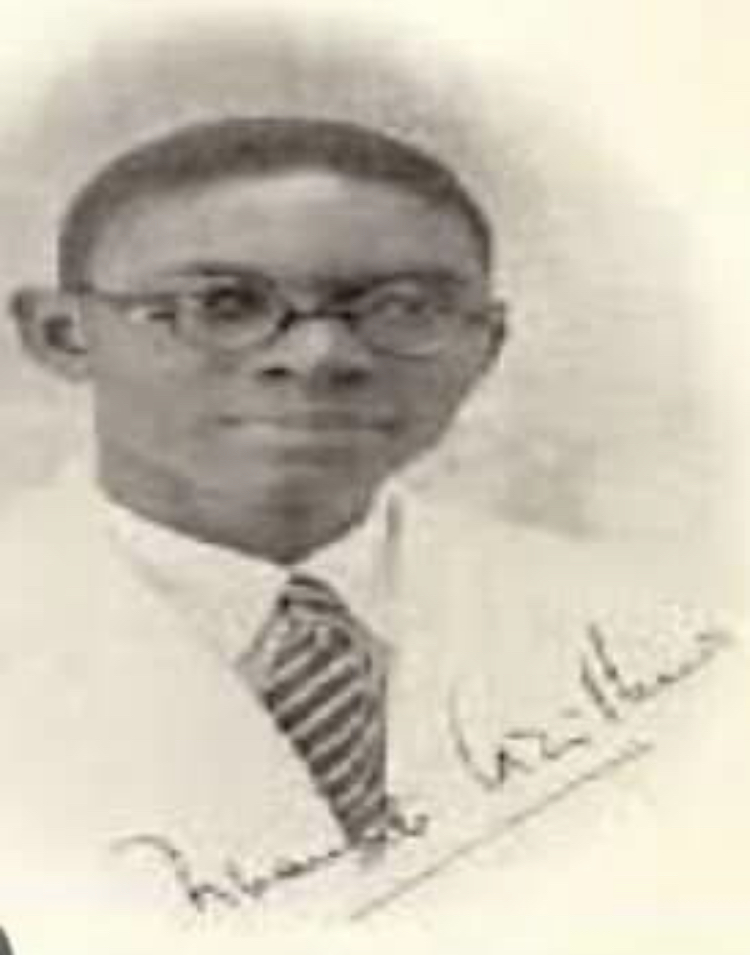
The young Isaac Wallace Johnson 


Wallace-Johnson first came to the attention of the Moscow Comintern in 1930 at an International Conference of Negro Workers in Hamburg, Germany. After organising the African Workers' Union in Nigeria in 1931, he and other black nationalist leaders were invited to the Soviet Union to attend the International Labour Defence Congress. He may have also enrolled briefly in the People's University of the East in Moscow under his favourite pseudonym, W. Daniels. Eventually, he became an associate editor of the Paris Communist publication Negro Worker, contributing articles under several pseudonyms.

Journalist and Organiser

Wallace-Johnson then moved to the Gold Coast to write for the African Morning Post of his friend Nnamdi Azikiwe and to organize workers in the mining areas. Identified by the British as an agitator and potential troublemaker, he was arrested, along with Azikiwe, for writing and publishing a seditious editorial. Convicted, he appealed and lost, then appealed to Great Britain's Privy Council.


In England, Wallace-Johnson attracted attention and support from leading British left-wing intellectuals and politicians. He also intensified his contact with George Padmore, Jomo Kenyatta, C. L. R. James, and others affiliated with the newly established International African Service Bureau. Wallace-Johnson became editor of Africa and the World and with Padmore, of the African Sentinel.

In April 1938 Wallace-Johnson returned to Freetown, intending to make his stay a short one. But customs agents seized 2,000 copies of the African Sentinel which he was bringing into Sierra Leone. The resulting publicity drew crowds to his series of public lectures. His oratory was brilliant, his targets well chosen, the population ready for leadership. Less than three weeks after his arrival, bolstered by a mass following, Wallace-Johnson inaugurated the West African Youth League, the first effective, large-scale political movement in Sierra Leone's history.

Supported by wage earners and the unemployed, the Youth League swept two elections in a row: the Freetown Municipal Council elections of 1938 and the Legislative Council elections of 1939. These successes, plus Wallace-Johnson's charismatic effect on the masses, his unrelenting exposure of labor exploitation, and his uncanny ability to discredit the colonial government, further angered British officials.

Fearing that Wallace-Johnson would foment disloyalty among African soldiers and policemen, the government enacted a series of ordinances in the summer of 1939 which severely limited his and other Sierra Leoneans' liberties. At the start of World War II he was interned as an "undesirable."

Upon his release late in 1944, Wallace-Johnson resumed his activities immediately. He was an influential spokesman at several international conferences, particularly the 1945 Manchester Pan African Conference. Within Sierra Leone, however, he entered a political cul-de-sac. The Youth League foundered, never regaining the momentum and following which it had lost during the war. Wallace-Johnson himself lost considerable popular support when he opposed the planned reconstitution of the Legislative Council to give majority representation to the protectorate. Although he was still respected and admired as a witty political critic, his stand on this issue denied him a major role in Sierra Leone's postwar independence movement. On May 10, 1965, at the age of 70, he died in a car crash in Ghana while attending the Afro Asian Solidarity Conference.


Further Reading

There is no study of Wallace-Johnson as yet, but some information can be found in James Hooker, Black Revolutionary: George Padmore's Path from Communism to Pan-Africanism (1967). Wallace-Johnson's career is recounted in John R. Cartwright, Politics in Sierra Leone, 1947-67 (1970). Good background information is in Martin Kilson, Political Change in a West African State: A Study of the Modernization Process in Sierra Leone (1966).

□ On May 10, 1965, at the age of 70, ISAAC THEOPHILUS AKUNA WALLACE JOHNSON died in a car crash in Ghana while attending the Afro Asian Solidarity Conference.

Was that a freak accident, or, was that an orchestrated political assassination?